Purchase quenchant
Product name and expected quantity
ANRAN supplies quenchants for high-chromium white iron and Cr–Mo steel SAG mill liners, ultra-high-speed and general-purpose quenchants, cooling-curve analyzers, internal workpiece temperature measurement systems and quenching fixtures.
Each product is described, quoted and supplied separately. Technical documents are optional.
Observe batch lifting, immersion position and medium response.
Our primary focus is high-chromium white iron quenchant. Each other quenchant and equipment product has its own application.
Addresses insufficient through-hardening with air cooling, uneven hardness in heavy sections and cracking when cooling is intensified. Temperature-range-specific cooling and workpiece validation help balance service performance and create scope to optimize nickel, molybdenum and other alloy additions.
Features, performance and purchasing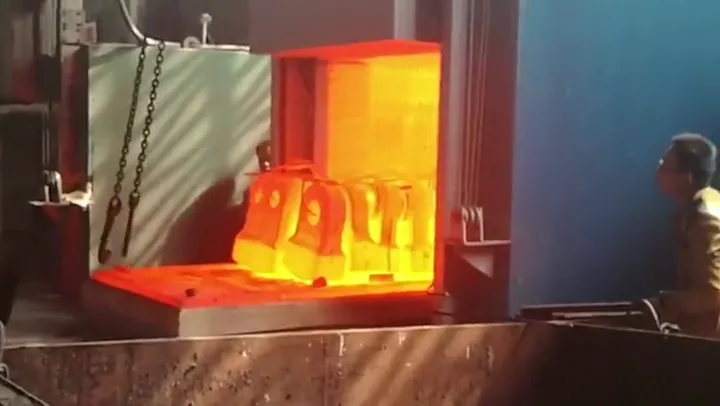
Match the quenchant, loading arrangement and relative motion to heavy-section liners that need wear resistance, impact resistance and resistance to fracture in service. Assess results from surface to core rather than maximizing surface hardness alone.
Features, performance and purchasing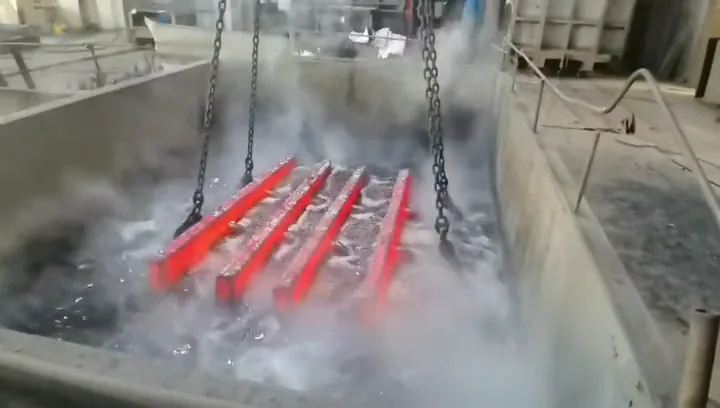
For workpieces requiring intensified cooling. Compare ANRAN test curves, then discuss the required temperature intervals, operating conditions and crack-control approach.
Features, performance and purchasing AR-GP · General-purposeFor routine quenching and batch production, including general water-based quenchant selection and replacement of oil quenching where the application permits.
Features, performance and purchasing
Compare fresh and in-service bath samples and record cooling curves. Also suitable for the customer's existing quenchant and other brands.
Check whether the core has reached temperature and how different locations cool, without requiring replacement of the existing quenchant or equipment.
Address the loading and cooling requirements of a specific workpiece. Design and supply can be ordered separately.
A standard probe measures the medium's cooling response under specified conditions. In production, material, section size, surface condition, films and relative motion also affect heat transfer.
Buying quenchant does not require buying a tester, and buying a tester does not require changing your current quenchant. Add digital analysis and complementary equipment when further testing, analysis or customization is needed.
Technical method and published patent applicationCharacterise the cooling medium
Analyse within model limits
Check actual cooling and results
Furnace discharge, lifting, transfer and immersion.
See the products in their production context.
Observe fixtures, lifting position and transfer.
Select a video, then press play. Footage shows production; actual microstructure and properties must be checked against inspection results for the workpiece.
Performance depends on dilution, bath temperature and relative motion. Values and conditions are presented together for selection discussions.
These are standard-probe measurements, not surface or core curves of a real workpiece.
Explore product cooling characteristics| Maximum cooling rate | 15.3 °C/s |
|---|---|
| Cooling rate at 300°C | 8.9 °C/s |
| Characteristic temperature | 598 °C |
| Scope of record | This sample and these test conditions |
Calculate from non-boron steel chemistry and austenite grain size.
Select media, enter a known H value and analyse cooling intervals.
Use DI and H to calculate the critical round-bar diameter.
Enter end-quench test points to analyse hardness curves and intersections.
Screen medium H ranges using DI and the target diameter.
Calculate CE(IIW), Pcm and CET to support weldability assessment.
Purchasing quenchant, testing a bath or investigating a workpiece problem each has its own product route.
Product name and expected quantity
Fresh fluid, in-service fluid and cooling behaviour
Core heating and cooling behaviour
Workpiece and production requirements
Intelligent systems and patent-based technology
These are independent requests, not mandatory stages of a purchasing process. If you need an intelligent heat-treatment system, explore the patent-based technology and its design method.
No lengthy process questionnaire is needed.
Start with the material, workpiece or current issue.
Yes. Quenchants, analyzers, internal temperature measurement systems and fixtures are available separately. Additional equipment is optional.
Start with the workpiece or the problem you see. An email address and a short message are enough. Drawings, composition and reports may be provided later if you choose.
Yes. The SYQ-2 configuration is selected for the medium and testing task. Switching to ANRAN quenchant is not required.
Not directly. Standard probes compare the medium's response; internal workpiece sensors check actual temperature changes. Software predictions are identified separately.
If you know the product, send the model and quantity. If not, tell us about the workpiece and the issue.
Contact us by email, phone, WhatsApp or WeChat about quenchants, fixtures and test equipment.

The email link opens your email application. You can also copy the address and compose a message yourself.